

Why a Little Pond Algae Isn’t a Bad Thing.

One of the most common concerns pond owners have in spring and early summer is algae.
The water starts turning green, string algae shows up on the rocks, and suddenly, people think something is wrong with their pond.
But the truth is, a small amount of algae is completely normal.
In fact, a little algae is often a sign that your pond ecosystem is alive and functioning the way it should.
A pond isn’t meant to act like a swimming pool. It’s a living environment filled with fish, plants, beneficial bacteria, insects, and microscopic life all working together. Algae naturally become part of that balance.
Take a look at a natural stream or lake sometime. Rocks are usually coated with algae, and aquatic life depends on it more than most people realize. In backyard ponds, a light layer of algae on rocks and gravel can actually make the pond feel more natural and established.
Not all algae are bad.
In moderation, algae can actually help your pond by:
Absorbing excess nutrients from the water
Producing oxygen during daylight hours
Providing a natural snack for koi and goldfish
Supporting the biological balance of the ecosystem
Koi and goldfish will often spend part of the day grazing on algae along rocks and edges of the pond. It’s natural behavior for them.
The problem usually isn’t algae itself. The problem is when algae start growing faster than the rest of the pond can keep up with.
That’s why spring and early summer tend to be peak algae season.
As water temperatures warm up, algae begin growing almost immediately. Meanwhile, beneficial bacteria are still rebuilding after winter, and aquatic plants haven’t fully filled in yet to compete for nutrients and sunlight.
This creates a temporary imbalance where algae get a head start.
It’s also very common to see algae blooms after a spring pond cleanout. During a cleanout, the pond gets refreshed for the season, but parts of the ecosystem essentially reset themselves too. More sunlight reaches the rocks, plants haven’t grown back yet, and nutrients become readily available in the water.
The good news is that in a healthy ecosystem pond, this usually settles down naturally as the season progresses.
The goal with algae shouldn’t be perfection.
The goal is control and balance.
One of the biggest mistakes pond owners make is trying to completely sterilize their pond with excessive chemicals. Crystal-clear water doesn’t always mean a healthy pond.
Instead, focus on creating conditions where the pond can naturally stay balanced.
A few of the best ways to reduce excessive algae growth naturally are:
Add more pond plants. Aquatic plants compete directly with algae for nutrients. Waterlilies, floating plants, marginals, and submerged plants all help shade the pond and reduce algae growth.
Keep beneficial bacteria levels strong. Beneficial bacteria like BactiMAX help break down fish waste and organic debris before algae can feed on it. Spring bacteria treatments are especially important while filtration systems are waking back up after winter.
Remove debris before it builds up. Leaves, sludge, uneaten fish food, and decaying plant material all release nutrients into the water. Less waste means less fuel for algae.
Improve water movement and aeration. Stagnant water encourages algae growth. Good circulation helps oxygenate the pond and supports healthy bacterial activity.
Avoid overfeeding fish. Excess fish food eventually becomes algae food. Feed only what your fish can quickly consume.
The biggest thing to remember is this:
A healthy pond will never look perfectly sterile.
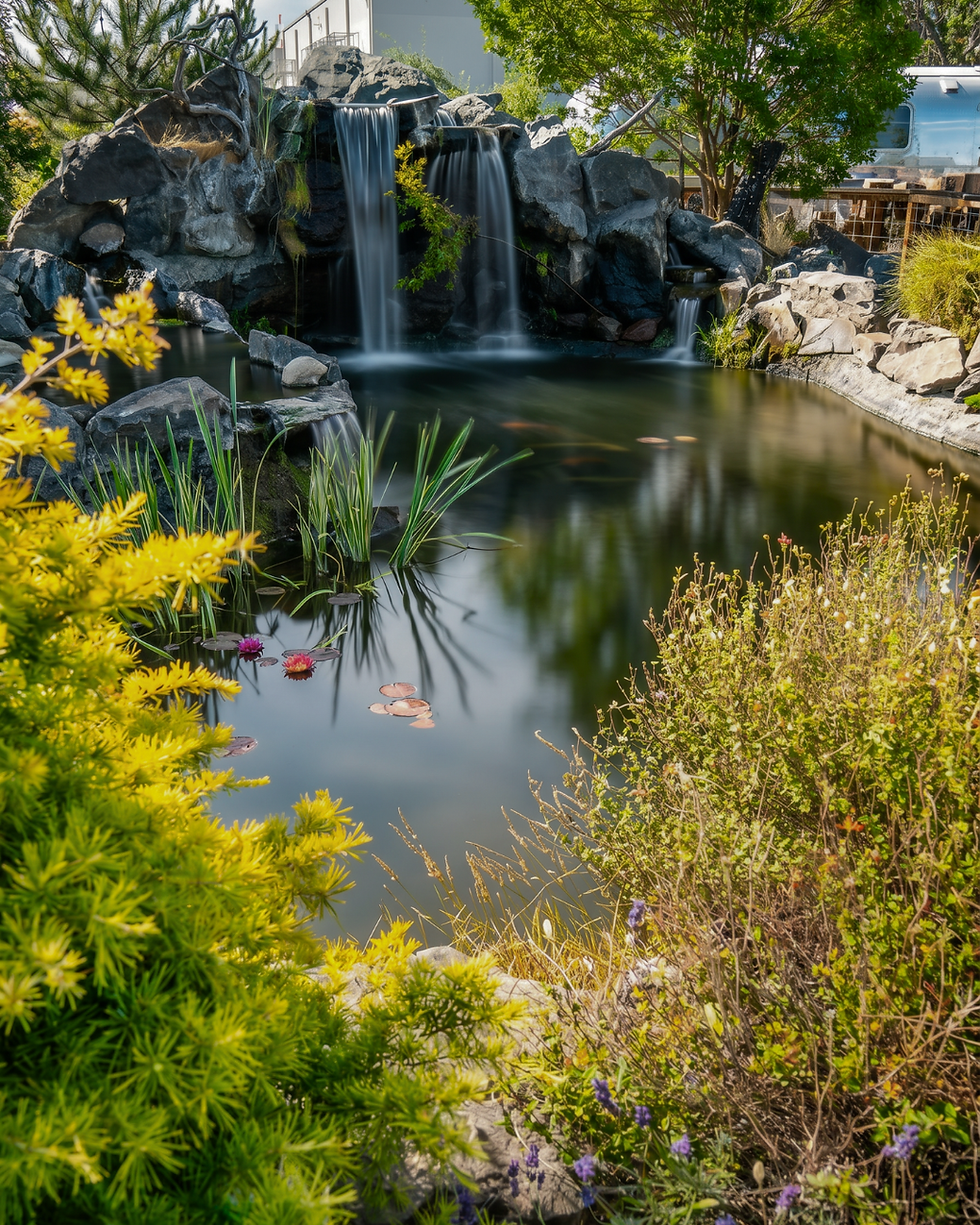
A little algae on a waterfall rock or a slight green tint during spring startup doesn’t mean your pond is failing. It means your pond is alive and adjusting to the season.
With proper filtration, healthy plant coverage, beneficial bacteria, and a little patience, most ponds naturally move toward balance over time.
And when balance improves, algae usually stop becoming the main thing you notice.



Comments